
High Quality Boho Clothing Brands: 2026 Guide

Table of Contents
- How to Spot High Quality Boho Clothing Brands
- Ethical Boho Clothing Brands: What Certifications Matter
- Sustainable Boho Clothing: Materials That Last
- Boho Dresses: Flowy Silhouettes for Every Occasion
- Canadian-Made Boho Clothing: Local Design and Shipping
- Price vs. Value: What High Quality Really Costs
- Building a Versatile Boho Wardrobe
- Conclusion: Finding Your Perfect Boho Pieces
- Frequently Asked Questions
Last Updated: October 12, 2026
How to Spot High Quality Boho Clothing Brands
Finding high quality boho clothing brands starts with reading the fabric label before the price tag. A growing movement toward natural, high-quality fabrics such as organic cotton, linen, and silk is reshaping how shoppers judge boho fashion, according to Boutique Avec Style's 2026 boho style report.
The boho aesthetic sells a feeling: free-spirited, relaxed, a little romantic. That feeling is easy to fake in a photo and hard to fake in construction. Below are the criteria we use to evaluate any boho clothing brands, including our own.
Fabric and Construction: What to Look For
Start with fiber content, then check the seams. A fabric list naming linen, cotton, rayon, or viscose tells you more about longevity than marketing copy.
Look for these signals of quality construction:
- French or bound seams instead of raw, fraying edges
- Lining in dresses and skirts that could otherwise be sheer
- Buttons and zippers that feel weighted, not flimsy
A common mistake is assuming "natural" always means durable. Rayon and viscose are plant-based but can shrink or stretch if care instructions are ignored. Check the tag before you commit.
Fit and Sizing: Beyond the Label
Sizing labels vary wildly across boho clothing brands, so measure yourself rather than trusting a number. Loose, flowy silhouettes hide poor fit, which is why fit guidance matters more here than in tailored fashion.
Ask three questions before buying:
- Does the brand publish a size chart with actual measurements, not just XS-XL?
- Do product photos show the piece on more than one body type?
- Is there a stated return or exchange policy if the fit is wrong?
If a brand cannot answer all three, treat it as a warning sign. Inclusive sizing is a claim, and claims need evidence.
Ethical Boho Clothing Brands: What Certifications Matter
"Ethically made" is not a certification, just a phrase any brand can print on a hangtag. To tell real ethical boho clothing brands from ones borrowing the vocabulary, check whether they name a third-party program you can look up yourself, and whether it covers the claim being made.
Certifications are not interchangeable. Each verifies a different thing, and a brand can hold one while ignoring the others. Here is what the common programs cover:
| Certification | What it verifies | What it does not cover |
|---|---|---|
| GOTS (Global Organic Textile Standard) | Organic fiber content plus processing and social criteria across the supply chain | Whether the finished garment is durable or well-constructed |
| OEKO-TEX Standard 100 | That the finished textile has been tested for harmful substances | Organic fiber content or labor conditions |
| Fair Trade Certified | Labor standards, wages, and worker conditions at certified facilities | Fiber content or dye chemistry |
| B Corp | A company's overall social and environmental performance | Any individual garment or fabric |
| bluesign | Chemical management and input streams at the mill level | Wages or worker conditions |
A brand claiming "organic cotton" without a GOTS or equivalent certificate is asking you to take its word, as is one claiming "non-toxic dyes" without OEKO-TEX or bluesign documentation. Neither claim is automatically false, but neither is verifiable, and verifiability is the point.
How to Verify a Claim in Under Five Minutes
- Find the certification name on the product page or label. If it is missing, the claim is marketing.
- Search the certifying body's database for the brand or facility; most maintain public lookup tools.
- Check the scope. A B Corp badge tells you about the company, not the dress you are holding.
- Look for a certificate number or license code. Real certifications carry one.
A common pattern is a brand listing three or four logos in a footer with no indication of which product each applies to. That is a signal to slow down, not to walk away.
We keep our own claims narrow and specific: our pieces are designed as sustainable clothing, and we publish the fiber content of every item so you can judge the material for yourself.
What Certifications Cannot Tell You
No certification covers fit, drape, or how a garment looks after twenty washes, which is why certification is a starting filter, not a final answer. Use it to eliminate brands, then use fabric composition, construction, and care requirements to choose between the rest.
Sustainable Boho Clothing: Materials That Last
Sustainable boho clothing is less about a label and more about how long a garment stays in your closet. A linen dress worn for a decade beats a cheap cotton top replaced every season.
Natural Fabrics: Linen, Cotton, and Rayon
Each natural fiber behaves differently, and knowing the difference helps you buy once instead of twice.
| Fabric | Feel | Best For | Care Notes |
|---|---|---|---|
| Linen | Crisp, breathable | Summer dresses, warm-weather tops | Wrinkles easily, softens with washing |
| Cotton | Soft, structured | Everyday tops, skirts, dresses | Machine washable, holds shape well |
| Rayon | Fluid, drapey | Flowy dresses, wide-leg pants | Can shrink, follow the care tag closely |
| Viscose | Silky, lightweight | Sweaters, knit pants | Hand wash or dry clean to protect the drape |
The Bambi Dress blends 80% rayon with 20% linen, giving you rayon's fluid drape with a bit of linen's structure, which is why it works for Sunday brunch and still photographs well.

Boho Dresses: Flowy Silhouettes for Every Occasion
The best boho dresses solve a real problem: they need to work for more than one event.
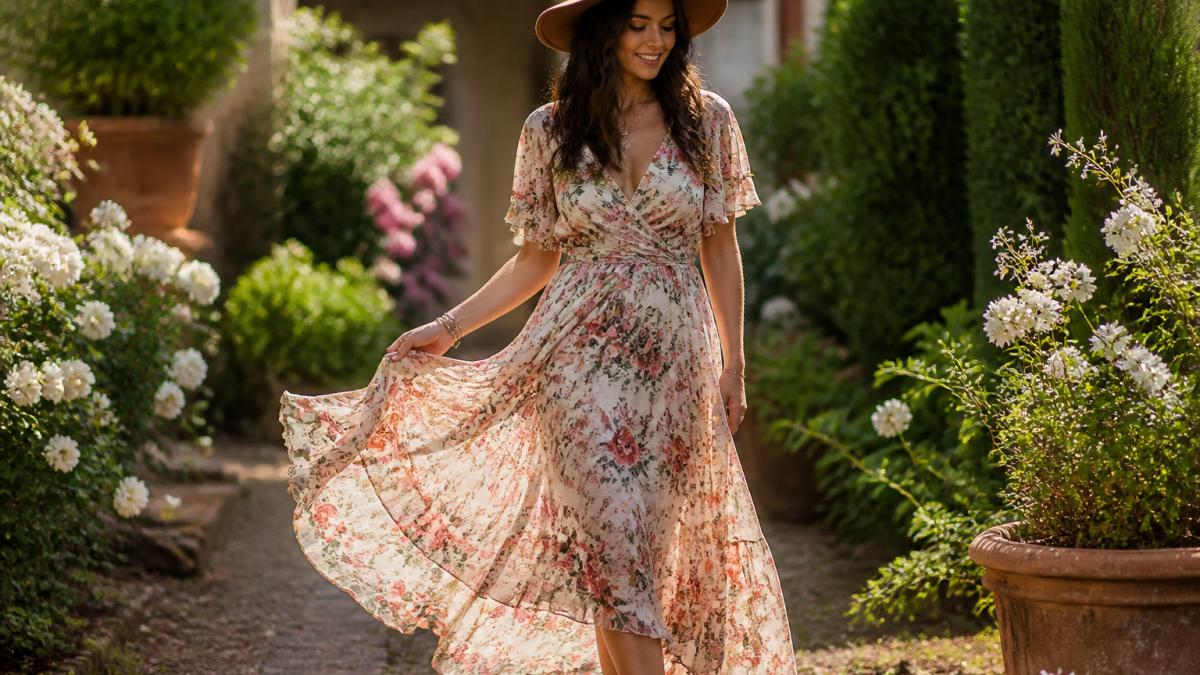
Runway collections are pushing this further. Isabel Marant's Spring/Summer 2026 show featured crochet shorts, dresses, and skirts, per Coveteur's 2026 boho trend coverage, which confirms the silhouette is not going anywhere.
Our Bambi Dress uses an A-line maxi cut with a V-neckline and short flow sleeves. The Sutton Dress White takes the same idea in 100% cotton eyelet with a high-low hem and a woven belt, so you can cinch the waist or leave it loose.

Canadian-Made Boho Clothing: Local Design and Shipping
Where a brand ships from changes what you pay and how long you wait. That math is worth understanding before comparing prices.
The Real Cost Difference Between Domestic and Cross-Border Orders
When you order from a brand shipping within the country, the price at checkout is usually the price you pay: no customs brokerage fee, no duty on delivery, no currency conversion surprise.
When you order from a US or overseas brand, three costs can stack on top of the listed price:
- Duty and taxes assessed by the Canada Border Services Agency when the parcel enters the country
- Brokerage fees charged by the carrier to clear the parcel, which are separate from duty and often larger than it
- Return shipping back across the border, which is frequently at your expense and can exceed the value of a single item
A $90 dress from a cross-border brand can land at $130 or more once those costs apply, and returning it can cost another $25 to $40. That comparison matters more than the sticker price.
What to Check Before You Buy From Any Brand
- Where it ships from. A .ca domain does not mean domestic fulfillment. Look for a stated warehouse or studio location.
- Duties and taxes. The clearest brands state whether prices include them or whether they are collected on delivery.
- Return window and cost. A 14-day window with paid return shipping is a very different offer from a 30-day window with free returns.
We ship from within the country and publish shipping and return terms on every product page, so the total cost is visible before checkout rather than at the door.
Why Local Design Changes the Fit Conversation
Domestic brands tend to size for the bodies they sell to most and can adjust a pattern faster when customers report a fit problem. Exchanges are also simpler: a domestic return does not cross a border, so turnaround is measured in days rather than weeks.
If a brand hides its shipping origin, return terms, or duty policy until after purchase, treat that as a red flag regardless of where it is based.
Price vs. Value: What High Quality Really Costs
Price and value are not the same thing, and boho fashion is where that gap shows up most. A $40 top that loses its shape after two washes costs more per wear than a $60 top that lasts three years.
Here is how we think about the price range across our own pieces:
| Piece | Price | Why It Earns Its Place |
|---|---|---|
| Natural High Pants | $54.00 | Lightweight, ends at the ankle, easy with sandals |
| Merry Jane Top | $56.00 | Floral boho blouse, loose fit, pairs with slacks or denim |
| The Boho Sweater | $59.00 | Viscose blend, stripe motif, casual evening wear |
| Express Yourself Skirt | $63.00 | Embroidered midi, high-waisted, cocktail-ready |
| The Bambi Dress | $77.00 | Rayon-linen blend, A-line maxi, brunch to dinner |
| Wren Pants Beige | $78.00 | Ultra-wide leg, elasticized back waist, office-friendly |
| Dolly Skirt | $87.00 | Embroidered, mid-thigh, zipper front |
| Hotline Swing Skirt | $90.00 | High-waisted, pleated, sits below the knee |
| Dove Pants Cheetah Print | $114.00 | Knit, high-rise, wide-leg statement piece |
| Sutton Dress White | $172.00 | Cotton eyelet, high-low maxi, woven belt |
A common mistake is comparing a well-made piece to a cheaper lookalike on price alone. Compare cost per wear instead: divide the price by how many times you realistically expect to wear it.

Building a Versatile Boho Wardrobe
A versatile boho wardrobe starts with pieces that mix, not pieces that match. The goal is a small set of items that combine into many outfits, so you spend less time deciding and more time wearing.
Build around these anchors:
- One flowy dress that works for day and evening
- One wide-leg pant in a neutral tone
- One statement skirt with embroidery or texture
Wide-leg denim, fringe, and lace details are the finishing touches that push an outfit from plain to boho. Add them last, once the base pieces are in place.
Conclusion: Finding Your Perfect Boho Pieces
The hardest part of shopping for boho clothing is trusting that what arrives will match what you saw online. Most returns happen because the fabric, fit, or finish did not live up to the photo.
At Pink Martini Collection, we publish the fiber content, fit notes, and price of every piece so you can judge for yourself before you buy.
Browse the collection and add to cart with confidence, knowing exactly what you are getting.
Frequently Asked Questions
What makes a boho clothing brand high quality?
High quality boho clothing brands focus on fabric, construction, and fit. Look for natural materials like linen, cotton, and rayon, which breathe well and hold up over time. Check for reinforced seams and consistent stitching. A brand that provides detailed size charts and cares about inclusive sizing is also a good sign. For example, Pink Martini Collection offers pieces like the Bambi Dress made from a rayon-linen blend, showing a commitment to quality materials.
Which boho clothing brands use sustainable materials?
Many brands now use organic cotton, linen, and recycled fabrics. When evaluating sustainable boho clothing, look for certifications like GOTS or Fair Trade. However, certifications can be hard to verify. A practical approach is to check the brand's website for material transparency. Pink Martini Collection, for instance, lists the exact fabric composition for each piece, such as the Sutton Dress White made from 100% cotton. This transparency helps you make an informed choice.
How can I tell if boho clothing is ethically made?
Ethical production is hard to confirm without third-party audits. Start by looking for certifications like Fair Trade Certified or B Corp. If a brand doesn't have these, check if they publish information about their factories or suppliers. You can also look for Canadian-made boho clothing, as local production often means stricter labor laws. Pink Martini Collection emphasizes sustainable pieces, but always verify claims by checking their about page or contacting customer service directly.
What fabrics are best for boho clothing?
Linen, cotton, rayon, and viscose are ideal for boho styles. They are breathable, drape well, and feel comfortable against the skin. Linen and cotton are durable and get softer with age. Rayon and viscose offer a silky feel and flowy movement. For example, the Wren Pants Beige from Pink Martini Collection use a rayon-polyester blend for a relaxed fit, while the Merry Jane Top is 100% polyester for easy care. Choose based on how you plan to wear the piece.
Where can I shop for Canadian-made boho clothing?
You can find Canadian-made boho clothing on brand websites and at local boutiques. Shopping directly from a brand's online store often gives you the best selection and access to size charts. Pink Martini Collection is a Canadian brand offering a range of boho-chic pieces, from the Boho Sweater to the Dolly Skirt. They provide detailed product descriptions and a return policy, making online shopping more reliable. Always check shipping details for your location.


Comments