
How to Identify High Quality Boho Fabric

Quick Summary
High quality boho fabric is identified by its fiber content, weight and weave, and how it drapes and recovers. Check that the label names exact fiber percentages, then test the weave evenness and whether it springs back after scrunching. Choose midweight blends for flowing pieces that resist wrinkles.
- Look for exact fiber percentages on the label, not vague terms like soft blend.
- Midweight rayon and linen blends, around 120 to 200 GSM, suit flowing dresses and skirts.
- Hold a single layer to a window to check for an even, tight weave with no gaps.
- Scrunch the fabric for about 10 seconds and check that it springs back with few creases.
- Check seams, pattern matching and whether the lining fabric is named before buying.
Table of Contents
- Why Fabric Quality Decides How Boho Pieces Wear
- Best Fabrics for Boho Clothing and What Each One Does Well
- Step 1: Read the Fiber Content on the Label and Listing
- Step 2: Check Weight, Weave and Drape by Hand
- How to Tell If Cotton Fabric Is Good Quality
- Wrinkle-Resistant Fabrics for Everyday Boho Clothing
- Your Fabric Quality Checklist Before You Buy Boho Pieces
- Choosing Your Next Boho Piece With Confidence
- Frequently Asked Questions
Why Fabric Quality Decides How Boho Pieces Wear
Last Updated: November 1, 2026
Boho pieces are loved for their soft colours, flowing silhouettes and relaxed feel. But a boho piece only looks good for as long as the fabric holds up.
Fabric quality is what decides whether a dress still looks fresh after its tenth wash or sags after two. Good fabric resists wrinkles, keeps its shape and handles the daily grind of a busy schedule.
- Fiber content shows how the fabric will breathe, feel and care for itself
- Weight and weave show how sturdy the fabric is and how it will drape
- Finishing and seams show whether the piece was made to last
Best Fabrics for Boho Clothing and What Each One Does Well
Boho clothing uses a handful of fabrics again and again.
Rayon and linen blends are common in flowy dresses.
Viscose is a close cousin of rayon. It feels smooth and drapes well, though it needs gentler care.
Polyester is durable and resists wrinkles.
Cotton is soft, breathable and easy to care for. It works well for everyday tops and casual pieces.
Step 1: Read the Fiber Content on the Label and Listing
Start with the fiber content. It is the single most useful piece of information on any boho piece, and it is usually printed on the tag and in the online listing.
- Find the fiber content on the care label or the product details.
- Note the percentages. A listing that says 80% rayon and 20% linen tells you the piece is mostly rayon with some linen for structure.
- Check the lining separately. Many dresses have a different fabric inside, such as polyester.
- Compare the fiber content against what you need. Choose higher natural-fiber shares for breathability and lower shares for wrinkle resistance.
Here is a quick guide to how common fibers usually behave:
| Fiber | Feel | Breathability | Wrinkle Resistance |
|---|---|---|---|
| Cotton | Soft, familiar | High | Low to moderate |
| Linen | Crisp, textured | Very high | Low |
| Rayon/Viscose | Smooth, fluid | Good | Low |
| Polyester | Smooth, sturdy | Lower | High |
Watch out: A listing that only says "boho fabric" or "soft blend" without naming fibers is hard to judge. Ask for the exact content before you buy.
Step 2: Check Weight, Weave and Drape by Hand
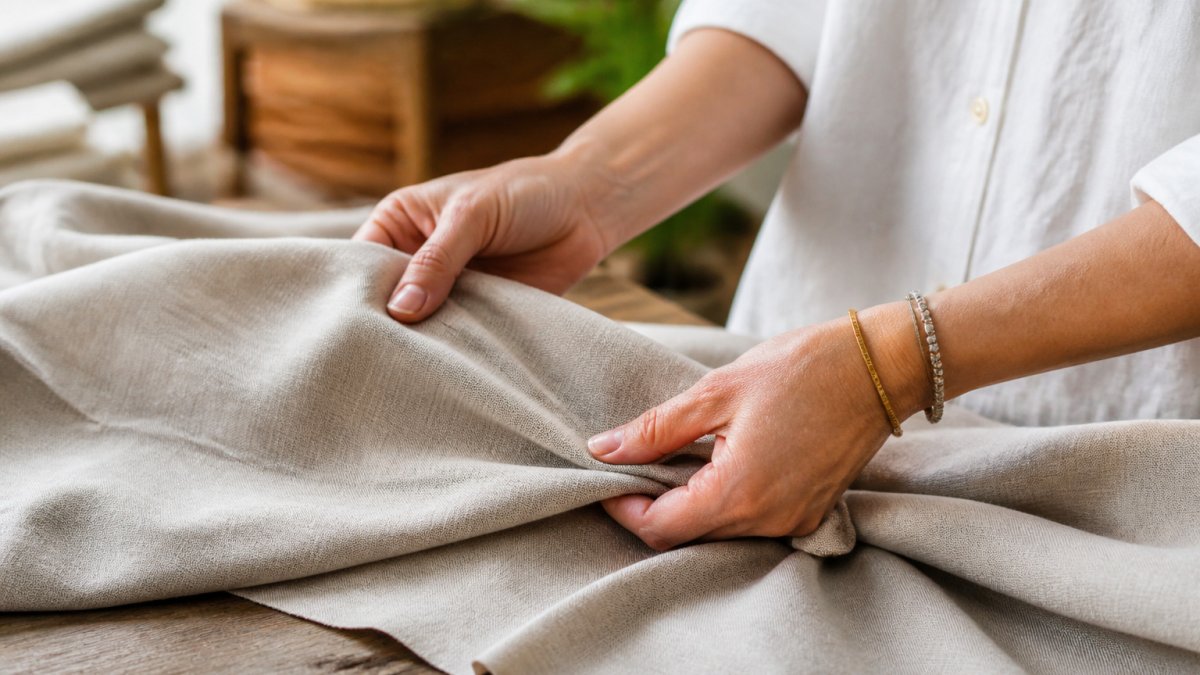
If you can touch the fabric, you can learn more in two minutes than any product description will tell you. The goal is to test three things, weight, weave consistency and drape, using repeatable checks rather than a vague sense of whether it "feels nice."
Weigh it against a known reference
Fabric weight is usually given in grams per square meter (GSM) or in ounces per square yard. If the listing states a number, use these rough bands as a starting point for boho apparel:
- Lightweight (roughly 60-120 GSM): sheer cottons, voile, chiffon and lightweight viscose. Good for summer tops and overlays, but prone to tearing at seams and to show-through.
- Midweight (roughly 120-200 GSM): most rayon and linen blends, cotton poplin and stable jersey. The sweet spot for dresses, skirts and tops that need to drape without clinging.
- Heavyweight (roughly 200-350 GSM): linen suiting, canvas, heavy cotton and upholstery-weight weaves. Better for structured jackets, bags and home décor than for flowing dresses.
If no weight is listed, use a comparison test: hold the fabric beside a piece you already own and trust. A summer dress fabric that feels noticeably thinner than a standard cotton T-shirt is likely to pill or tear early.
Run the light test for weave consistency
Hold a single layer up to a bright window or lamp. You are looking for evenness, not opacity alone.
- Even, tight weave: light passes through uniformly, with no bright pinholes or streaks. This resists snagging and holds shape.
- Loose or uneven weave: you see clusters of gaps, slubs that pull apart, or a visible grid that shifts when you tug. These are the spots where seams fail first.
- Excessive show-through on a lined garment: check whether the lining is opaque on its own. A sheer shell over a thin lining will still read as cheap in daylight.
Do the scrunch-and-release test
Clench a fistful of fabric for about 10 seconds, then release and smooth it flat.
- Springs back with few creases: the weave has good recovery and will resist wrinkling through a workday.
- Holds deep creases: expect ironing before every wear. Pure linen and some rayons behave this way by nature, so judge it against the fiber, not as an automatic defect.
- Stays stretched or baggy: poor elastic recovery. This is a red flag for knits and stretch blends, which should return close to their original shape.
Check drape and body
Gather a section in your hand and let it fall.
- Good drape: the fabric flows in soft folds and settles naturally. This is what gives boho dresses their movement.
- Stiff or boardy: it holds angular creases and stands away from the body. Fine for structured pieces, wrong for flowy ones.
- Flop without body: it collapses and clings. Usually a sign of very lightweight or low-twist yarn that will lose shape quickly.
Quick at-home tests for fiber and durability
These are safe, non-destructive checks you can do with a swatch or a hem you can spare:
- Stretch recovery: stretch a knit sample about 10% and release. It should return to its original size within a few seconds. Slow recovery predicts sagging at elbows and knees.
- Abrasion rub: rub the fabric against itself 20-30 times. Excessive fuzzing or surface pills signal early pilling.
- Color transfer: rub a damp white cloth on a hidden area. Dye on the cloth means the color may bleed in the wash.
These tests will not replace a lab report, but they will catch the most common quality failures before you buy.
How to Tell If Cotton Fabric Is Good Quality
Cotton is one of the most common boho fabrics, and it varies a lot in quality. Look for these signs:
- The fabric feels soft but not thin or see-through
- The weave is even, with no visible gaps
- The colour looks uniform, without blotchy patches
Cotton can shrink, so check whether the care label says to wash cold or to air dry. A cotton piece that is labelled pre-washed or pre-shrunk is often a safer choice for everyday wear.
Wrinkle-Resistant Fabrics for Everyday Boho Clothing
If your days are busy, wrinkle resistance matters as much as style. Polyester blends and some rayon blends hold their shape well.
The Merry Jane Top is 100% polyester. The Bambi Dress uses an 80% rayon and 20% linen blend.
Watch out: Wrinkle resistance and breathability often trade off against each other. A fully synthetic piece may stay crisp but feel warm in summer.
Your Fabric Quality Checklist Before You Buy Boho Pieces
A checklist is only useful if each line tells you what to look for and what a failing answer looks like. Use this one as a decision framework, not a box-ticking exercise.
1. Read the label like a spec sheet
- Fiber percentages are stated, not implied. "100% cotton" or "80% rayon, 20% linen" is usable. "Soft blend" or "boho fabric" is not, ask for the exact breakdown before buying.
- The lining is named separately. Many dresses and skirts have a polyester lining that changes breathability and care. If it is not listed, assume it is synthetic.
- Weight or construction is described. Look for GSM, ounces per square yard, or terms like poplin, voile, canvas or jersey. These tell you more than a style name.
2. Match the fabric to the project
Quality is relative to use. A fabric that is excellent for a curtain may be wrong for a dress.
- Apparel (dresses, tops, skirts): prioritize drape, recovery and skin comfort. Midweight rayon/linen blends and stable cottons work well; very lightweight weaves tear at seams.
- Upholstery and cushions: prioritize abrasion resistance and colorfastness. Tight, heavy weaves outperform loose, decorative ones. Check that the weave does not snag on jewelry or pet claws.
- Curtains: prioritize opacity, UV resistance and how the fabric hangs. Lightweight sheers are fine for layering but fade faster in direct sun.
3. Inspect the make, not just the material
- Seams are even and finished. Look for consistent stitch length, no puckering, and seam allowances that are overlocked or bound. Raw, fraying edges inside a garment predict early failure.
- Pattern matching is aligned. On prints, motifs should line up across seams. Misalignment is a sign of rushed cutting.
- Color is uniform. Blotchy patches, uneven dye at seams, or a visible difference between the shell and lining suggest poor dyeing.
- Trims and closures are secure. Buttons, zippers and hooks should be firmly attached and appropriate to the fabric weight.
4. Verify claims before you trust them
- Treat vague language as a question, not an answer. "Eco-friendly" and "premium" are marketing terms unless backed by a named certification or a specific fiber and construction detail.
- Fiber content is listed with percentages
- Lining fabric is named
- Weight or construction is described
- Care instructions suit your routine
Working through these points takes a few minutes and saves returns, regret and wardrobe clutter.
Choosing Your Next Boho Piece With Confidence
Once you know how to read fabric, shopping gets easier. Start with the fiber content, check the weight and drape, and match the fabric to how you plan to wear it. A boho piece made from good fabric will look better, feel better and last longer, whether you wear it to a meeting or out for an evening.
Browse the collection and find a piece that suits your busy life.
Frequently Asked Questions
What fabrics are commonly used in boho clothing?
Boho clothing most often uses natural fibres such as cotton, linen, wool and viscose, along with rayon blends that drape well. Cotton and linen are breathable and suit warm-weather pieces, while wool adds structure for cooler months. The Bambi Dress, for example, is 80% rayon and 20% linen. Checking the fiber content tells you how a garment will breathe, drape and care for itself, so read the label before deciding whether a fabric fits your wardrobe.
How can you tell if fabric is good quality?
Look at four things: fiber content, weave density, weight and finish. Hold the fabric up to light to check whether the weave is even and tight, without gaps or thin spots. Rub a small area between your fingers to feel for softness and any rough, loose fibres. Gently stretch a seam or edge to see whether the threads hold. Good quality fabric feels consistent across the whole piece, and its seams and hems lie flat without puckering.
What should high-quality cotton fabric feel like?
Quality cotton feels smooth, soft and slightly substantial, with an even surface and no thin or shiny patches. It should drape rather than stiffen, and it should not feel papery or scratchy. Pull gently on the fabric in several directions: a well-made cotton recovers its shape without distorting. Cotton that feels overly slick or chalky may contain heavy finishes that can wear off or change after washing.
How do you check fabric for durability before buying?
Check the fiber content, since natural fibres like cotton and linen and blends with a sensible share of synthetic fibre usually last longer than very thin, loosely woven fabrics. Examine the weave: a tighter, more even weave resists snagging and pilling. Look at the seams and stitch density, and check that the hems are finished neatly. These checks together give a useful picture of how a piece will hold up in daily use.


Comments