
A Guide to Ethical Certifications for Clothing Brands

Last Updated: November 2, 2026
Quick Summary
Ethical certifications verify specific claims about how a garment was made, not a vague promise of goodness. Each scheme certifies a defined scope, a material, product, facility, or company, so a single label rarely covers everything, and brands often stack certifications to cover the gaps.
- Sort every scheme into one of four scope buckets: material, product, facility, or company level.
- A labor certificate applies to a factory, not to every product a brand sells.
- Indirect costs like staff time and corrective actions often exceed the visible certification fees.
- A typical first certification cycle takes several months, and renewal is a standing commitment.
- A legitimate claim names the standard and a licence or certificate number you can look up.
Table of Contents
- What Ethical Certifications Actually Verify
- Sustainable Fashion Certifications: A Side-by-Side Comparison
- Ethical Clothing Certifications That Cover Labor and Social Responsibility
- Costs, Timelines, and Renewal: What Brands Actually Commit To
- How to Verify Clothing Sustainability Claims Before You Buy
- Greenwashing, Conflicts, and the Limits of Any Label
- Choosing Certified Pieces for Your Wardrobe
- Frequently Asked Questions
What Ethical Certifications Actually Verify
Ethical certifications for sustainable clothing brands verify specific claims about how a garment was made, not a vague promise of goodness. According to FashionUnited's overview of sustainability certification organizations, these schemes address different parts of sustainability rather than one uniform set of criteria.
Here's what most shoppers get wrong: a single label rarely covers everything. One standard might verify organic fiber content while saying nothing about worker wages. Another audits factory conditions but ignores dye chemistry.
A certification standard is a published set of requirements that an independent body audits against, with a certificate issued on passing. The key word is independent. Self-declared claims, however polished, are not certifications.
Sustainable Fashion Certifications: A Side-by-Side Comparison
The useful way to compare ethical certifications for sustainable clothing brands is not by logo recognition but by scope: what the standard actually certifies, at what level of the supply chain, and, just as important, what it leaves out.
Start by sorting every scheme into one of four scope buckets:
- Material-level standards verify a fiber or input (for example, organic content or recycled content). They follow the material, not the finished garment.
- Product-level standards certify a specific finished item and usually require chain-of-custody documentation from raw material through to the last processor.
- Facility-level standards audit a site, a farm, a dyehouse, a cut-and-sew factory, against environmental or social criteria. The certificate belongs to the facility, not to the brand or the product.
That distinction is the single biggest source of confusion in this category. A brand can hold a company-level certificate and still source from uncertified factories; a factory can hold a social certificate while the brand selling its output holds nothing.
| Certification type | What it verifies | Scope level | What it typically excludes | Strongest for |
|---|---|---|---|---|
| Organic fiber standards | Fiber grown and processed under defined organic criteria, with chain of custody | Material and product | Factory labor conditions, dye chemistry outside the standard's list | Cotton and natural-fiber garments |
| Chemical management standards | Restricted hazardous substances in processing and finishing | Facility and product | Wages, working hours, fiber origin | Dyeing and finishing stages |
| Recycled-content standards | Percentage and traceability of recycled material claimed | Material and product | Social conditions, chemical restrictions beyond the standard's scope | Synthetic and blended fabrics |
| Labor and social standards | Worker rights, wages, hours, safety, grievance mechanisms | Facility (sometimes company) | Fiber content, chemical management, end-of-life | Cut-and-sew operations |
| Fair trade schemes | Pricing, premiums, and producer terms, often with social criteria | Producer organization and product | Factory-level chemical or waste performance | Smallholder and cooperative supply chains |
| Circular and waste standards | Design for reuse, waste reduction, take-back planning | Company | Day-to-day labor conditions, fiber origin | End-of-life and circularity planning |
Where Each Standard Is Strongest, and Where It Goes Quiet
No single scheme wins everywhere, and the honest comparison is about the edges of each standard's scope. Organic fiber standards are rigorous on farming inputs and processing but say little about factory labor. Social compliance audits are detailed on worker rights yet typically do not assess chemical management. Chemical standards can be strict on restricted substances while remaining silent on wages.
A brand serious about responsible sourcing usually stacks certifications rather than relying on one, and the stack should be chosen to cover the gaps: a material standard for fiber, a chemical standard for processing, and a social standard for the factory floor. For readers comparing which high-quality labels actually carry credible certification, our guide to high quality boho clothing brands walks through what to look for.
Ethical Clothing Certifications That Cover Labor and Social Responsibility
Labor-focused ethical clothing certifications verify the parts of garment production that environmental labels often skip: fair wages, safe working conditions, and worker rights at the factory level.
What most guides miss is that a labor certificate applies to a factory, not to every product a brand sells. A company can hold a social compliance certificate for one supplier and none for another.
Costs, Timelines, and Renewal: What Brands Actually Commit To
Most certification guides stop at the criteria and never explain what a brand actually signs up for. That is the gap this section fills: the practical mechanics of cost, time, and renewal, so a small or emerging label can plan rather than guess.
What Drives the Cost
Certification fees are rarely a single flat number. In practice, the total commitment is built from several components, and the mix varies by scheme:
- Application and membership fees, a fixed charge to enter the scheme, often tiered by company size or revenue band.
- Audit fees, usually charged per audit day, per site, plus auditor travel and expenses. More facilities means more audit days.
- Preparation and documentation, staff time to build the management system, collect evidence, and map the supply chain. This is the hidden cost most brands underestimate.
Because audit fees scale with site count and supply-chain complexity, a label with one cut-and-sew supplier faces a far lighter burden than a multi-country operation with several tiers of subcontractors. A common pattern is that the indirect costs, staff time and corrective actions, exceed the visible fees, especially in the first certification cycle.
How Long It Takes
Timelines follow the same logic. A typical first certification runs through application, document review, an on-site audit, a corrective-action window, and finally certificate issuance. Most practitioners find the full cycle takes several months, with the audit itself being a single point in a longer preparation process.
Renewal cycles vary by scheme, some require annual surveillance audits with a fuller reassessment every few years, while others operate on multi-year cycles.
Pathways for Small and Emerging Brands
This is where small brands feel the squeeze, and where the choice of scheme matters most. Several accessible entry points exist:
- Group or multi-site certification, smaller producers can sometimes certify jointly under a group structure, sharing audit costs and administrative burden.
- Stepwise or tiered programs, some schemes let a brand enter at a lower tier and build toward full certification rather than jumping straight in.
- Starting with a material or facility certificate, certifying one product line or one key supplier is often a more realistic first step than a company-wide program.
The honest trade-off is that the most recognized schemes tend to carry the heaviest compliance workload. For a small brand, the strategic question is not "which certificate is best" but "which certificate can I actually maintain, and what does it let me claim credibly."
How to Verify Clothing Sustainability Claims Before You Buy
Verification starts with the label, not the marketing page. A legitimate certification claim names the standard and, usually, a licence or certificate number you can check against the certifying body's public database.
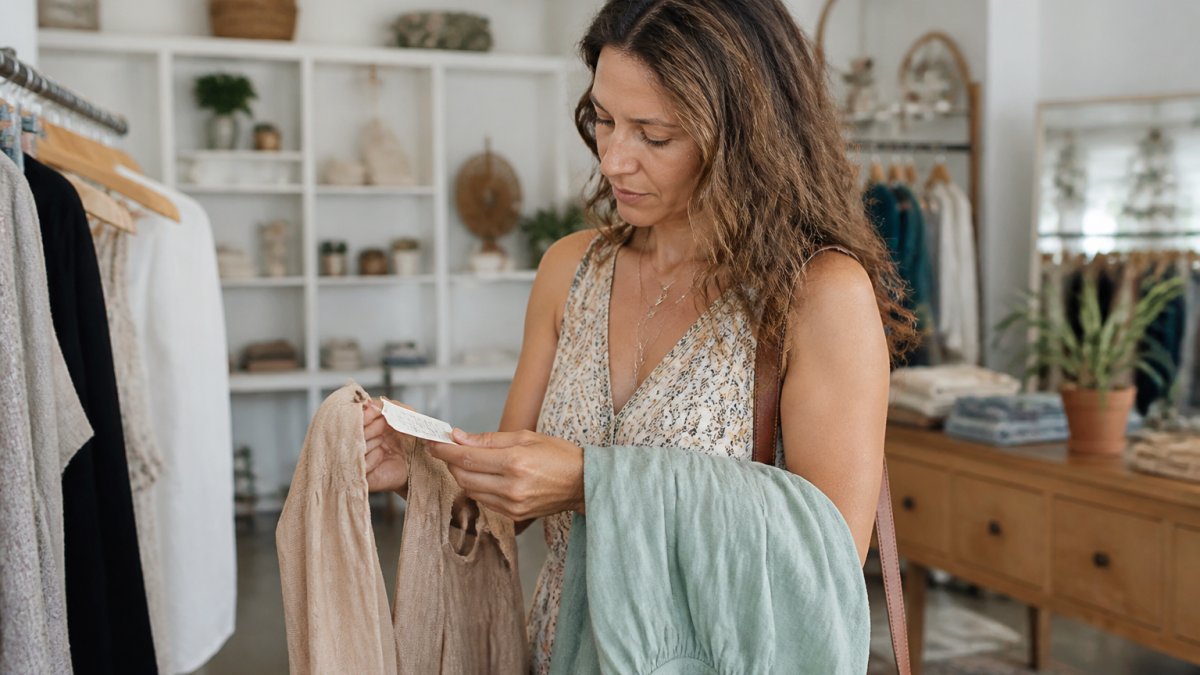
Use this checklist before you buy:
- Does the claim name a specific certification standard?
- Is there a certificate or licence number to look up?
- Does the certifying body's database list the brand or factory?
A 2025 study on the role of credibility induced by certification labels ran two quantitative experiments on how certification labels affect consumer trust, underscoring that credibility hinges on verification, not assertion. If a claim fails the checklist, ask the brand directly which standard applies and to what.
Greenwashing, Conflicts, and the Limits of Any Label
Greenwashing thrives on ambiguity, and certifications are not immune. Fashion Revolution is explicit that its Fashion Transparency Index measures public disclosure of information, not a brand's sustainability or ethics.
Conflicts of interest also exist. If you're worried about telling genuine ethical fashion from fast fashion marketing, our guide on how to tell ethical fashion from fast fashion breaks down the warning signs.
Choosing Certified Pieces for Your Wardrobe
Start with the certifications that match your priorities. If organic fibers matter most, look for product-level organic standards. If worker welfare is your focus, prioritize labor and fair trade schemes.
Once you know which certifications to trust, the next step is finding pieces that carry them. Our buying guide to sustainable clothing for women shows how to screen a label before checkout, and our guide to buying ethically made boho dresses online covers what to confirm before you order.
At Pink Martini Collection, we build feminine, boho-chic pieces designed for a busy lifestyle, with sustainable clothing pieces and interest-free installment payment options. Our customers tell us quality and versatility matter most, and 995+ reviews back that up.
Frequently Asked Questions
What certifications should I look for in sustainable clothing?
Start with what you care about most. For organic fiber content, look for GOTS or OCS. For recycled materials, check GRS or RCS. For chemical safety in production, OEKO-TEX STANDARD 100 and bluesign cover different stages. For labor rights, SA8000 and Fair Trade certifications address worker conditions and wages. No single label covers everything, so a brand with two or three complementary certifications usually signals more thorough oversight than one with a single logo.
What is the difference between ethical and sustainable fashion certifications?
Sustainable fashion certifications focus on environmental factors: fiber sourcing, chemical management, water use, and waste. Ethical clothing certifications focus on people: fair wages, safe working conditions, and worker rights. Some standards, like Fair Trade, combine both. FashionUnited notes that certification schemes address different parts of sustainability rather than one uniform set of criteria, so a brand claiming to be both ethical and sustainable should hold certifications that cover each area separately.
How can I tell whether a clothing certification is legitimate?
Check the certifying body's own database rather than trusting a logo on a hangtag. Reputable certifiers like GOTS, OEKO-TEX, and Fair Trade maintain public directories where you can search a brand or facility by name. Look for a license number on the label and confirm it matches the certifier's records. A 2025 study on certification labels found that credibility depends on how the label is presented and by whom, which is why independent third-party verification matters more than a brand's own claims.
Do sustainable fashion certifications cover the whole supply chain?
Most do not. Each standard defines its own scope, and that scope is usually a specific stage: fiber production, fabric processing, garment assembly, or retail. GOTS covers the full organic textile chain from harvesting to labeling, while OEKO-TEX STANDARD 100 tests the finished article for harmful substances. Supply-chain traceability across every tier often requires multiple certifications layered together, plus a brand willing to disclose its factory list.
What does a certified clothing brand have to prove?
It depends on the standard. A brand certified to GOTS must show organic fiber content, restricted chemical use, and wastewater treatment at processing facilities. SA8000 requires documented worker hours, wages, and safety conditions verified through independent audit. Certification typically involves an application, an on-site audit, corrective action for any findings, and renewal every one to three years. The brand also agrees to periodic re-inspection to keep the certificate valid.
How can shoppers verify a brand's sustainability claims?
Ask three questions: which certification, issued by whom, and covering what. Then check the certifier's public database for the brand or its factories. Fashion Revolution's Transparency Index is useful for seeing what a brand discloses publicly, but the organization states clearly that the index measures disclosure, not sustainability or ethics. Pair label checks with a look at the brand's published factory list and care-page details for a fuller picture.
The gap between a sustainability claim and a verified one comes down to evidence you can check. Pink Martini Collection makes that easier with sustainable pieces, versatile designs that move from office to evening, and interest-free installment options so quality doesn't wait for payday. Get started with Pink Martini Collection and build a wardrobe you can verify and love.


Comments