
Buy Ethically Made Boho Dresses Online: 2026 Guide

Table of Contents
- What Makes Boho Dresses Ethically Made
- Ethical Boho Clothing Brands Worth Your Attention
- How to Shop for Ethical Clothing Online
- Organic Cotton Boho Dresses for Comfort and Sustainability
- Boho Dresses Made in Canada and Small-Batch Production
- Versatile Styles That Work for Work and Evening
- Care and Longevity: Making Your Boho Dress Last
- Frequently Asked Questions
Last Updated: October 21, 2026
What Makes Boho Dresses Ethically Made
Shopping for ethically made boho dresses online goes beyond aesthetics: ethical production means fair pay, safe conditions, and materials that respect environmental limits. Knowing what "ethical" means helps you avoid greenwashing.
True ethical boho clothing combines sustainable materials and fair labor practices. Organic cotton made in exploitative conditions isn't ethical, and neither is a fair-wage garment made from fabrics that shed microplastics.
Sustainable Materials and Fabrics
Fabric matters as much as production. Organic cotton, linen, responsibly sourced rayon, and recycled fabrics are common in ethical boho collections.
Organic cotton is grown without synthetic pesticides, protecting soil and reducing chemical runoff. Linen needs fewer inputs than conventional cotton and biodegrades naturally.
Check the fabric content label: a blend like 80% rayon and 20% linen (as in the Bambi Dress) combines breathability with natural fiber benefits.

Fair Labor and Transparent Production
Ethical production means workers earn a living wage, work reasonable hours, and have safe facilities.
Many ethical boho brands work with small facilities or artisans rather than massive factories, allowing closer oversight and supporting local economies.
Certifications like Fair Trade Certified or B Corp status provide third-party verification of ethical claims. Fair Trade Certified standards ensure workers are paid fairly and work in safe conditions.
Ethical Boho Clothing Brands Worth Your Attention
Most roundups call a brand ethical and stop there, leaving you unable to compare two dresses side by side. Evaluate every brand, including this one, against the same six criteria so the decision rests on evidence.
The Six-Point Brand Comparison
Use this checklist for any brand you are considering, and ask the brand directly if the information is not on its site:
- Price and total cost. Add shipping, duties or brokerage fees, and care costs to the listed CAD price. A $70 dress that needs dry cleaning after every wear costs more over a year than an $90 dress you can wash cold and air dry.
- Materials and fiber content. Look for exact percentages on the care label, not a marketing phrase. An 80% rayon and 20% linen blend behaves and washes differently from 100% polyester with a lining.
- Production location and batch size. The brand should name the country and, ideally, the facility or artisan group. Small-batch claims only count when the brand states batch sizes or restock patterns.
- Size range and fit data. Check the full size run, garment measurements for each size, and shoulder-to-hem length. Fit notes like "runs small" beat a single model photo.
- Shipping regions and delivery windows. Confirm the brand ships to your province, the carrier, the delivery window, and whether tracking is included. Cross-border orders can add border handling time the brand does not control.
- Return window and conditions. Note the number of days, who pays return shipping, and whether sale items are final sale. Fit is the main reason for returns, so the window matters.
Applying the Criteria to This Collection
Pink Martini Collection is a useful worked example: pieces sit in the mid-range $56 to $93 CAD band. Here is how it maps to the six points:
- Price and total cost. Dresses run $56 to $93 CAD. Most styles are machine or hand washable, keeping care costs low; the Garden of Love Dress is the exception, recommending dry cleaning or hand washing.
- Materials. Fabric varies by style: the Lisette Dress uses 100% polyester with a lining for durability and opacity, while the Bambi Dress uses a rayon and linen blend for breathability. Read each product page's content list.
- Production and batch size. Ask for production location and batch details if not listed; a specific answer beats a vague one.
Quality Signals That Justify the Price
Construction, not price, tells you whether a dress is worth it. Look for reinforced seams at stress points, a lined bodice where fabric is light, smooth zippers, and facings at the neckline and armholes.

Customer feedback is a useful cross-check: reviewers of this collection have noted the quality and value relative to price. Look for comments about fit, fabric weight, and how the dress held up after washing.
What to Do When a Brand Will Not Answer
If a brand cannot tell you where a dress is made, what it is made of, or its return window, that is your answer. Move on to a brand that can; these criteria are the minimum information you need to buy online with confidence.
How to Shop for Ethical Clothing Online
Shopping online removes the fitting room, so the work shifts to verification before you click buy: checking ethical claims, getting sizing right, and calculating the real cost before the order arrives.
Verify Certifications and Production Claims
Start with the product page and the brand's sustainability or about page, then look for four things:
- Named certifications. Fair Trade Certified and B Corp are third-party verifications of labor and business practices. GOTS (Global Organic Textile Standard) verifies organic farming and processing for cotton. A named certification is stronger than a logo without a certifying body.
- Fiber percentages. The care label should list exact percentages, such as 80% rayon and 20% linen, rather than a single word like "natural." Percentages tell you how the dress will drape, breathe, and wash.
- Production location. The brand should name the country and, where possible, the facility or artisan group. "Made responsibly" is not a location.
- Labor information. Look for statements about wages, working hours, and facility audits. If the brand works with small facilities or artisans, it should say so specifically.
Fair Trade Certified standards and the GOTS public database are both searchable, so you can confirm a claim rather than take it on faith. Researchers S.
Be skeptical of vague language such as "eco-friendly," "conscious," or "green" without specifics. A credible brand will state the percentage of organic material, name its production partners, or link to a third-party certificate. Otherwise, treat the claim as unproven.
Check Sizing, Fit, and Return Policies
Fit is the main reason online dress orders get returned, so spend your effort here. Before buying:
- Find the size chart and garment measurements. Look for bust, waist, and hip measurements for each size, plus shoulder-to-hem length. A midi dress that hits mid-calf on a 5'4" wearer may sit above the ankle on a taller wearer, and the length measurement is the only way to know before it arrives.
- Read the fit notes. Phrases such as "runs small," "relaxed through the waist," or "true to size" are more useful than a single model photo. Check whether the model's height and size are listed so you can scale the image.
- Check the size run for the specific dress. Sizing is not always identical across a collection. In this collection, the Garden of Love Dress runs to 2XL and the Sahara Dress is offered in XS through XL, so confirm the run on the product page for the dress you want.
- Read reviews for fit feedback. Look for comments about whether the dress runs small or large, how the fabric feels, and whether the length matched expectations.
Calculate the Total Cost Before You Check Out
The listed price is only part of what you pay. Build a simple total-cost estimate before you commit:
- Item price in CAD.
- Shipping to your province, including any handling charge.
- Duties and brokerage fees if the order crosses a border. These are charged by the carrier or at delivery and are not always shown at checkout.
- Care cost over the life of the dress. A machine-washable dress that you wash cold and air dry costs far less per year than a dry-clean-only dress. The Garden of Love Dress, for example, recommends dry cleaning or hand washing, so factor that in.
- Expected wears per year. Divide the total cost by the number of times you expect to wear the dress. A versatile dress you wear weekly for a season costs less per wear than a occasion dress you wear twice.
This is the number that actually tells you whether a dress is affordable, and it is the number most roundups leave out.
Shipping, Delivery, and Cross-Border Orders
Confirm the shipping regions, carrier, and estimated delivery window before you order. Check whether tracking is included.
A Quick Pre-Purchase Checklist
- Certification or verification named and checkable
- Fiber percentages listed on the product page
- Production location stated
- Size chart with garment measurements and length
If you can answer every line, you have enough information to buy with confidence. If several lines are blank, ask the brand before you order, or choose a dress from a brand that answers.
Organic Cotton Boho Dresses for Comfort and Sustainability
Organic cotton offers a natural, breathable option that aligns with sustainable values. Unlike conventional cotton, which uses heavy pesticide loads, organic cotton grows without synthetic chemicals, protecting farm workers, preserving soil health, and reducing water pollution.
Organic cotton costs more to produce, which is why many ethical brands blend it with other materials.
When shopping Pink Martini Collection, pieces made primarily from rayon or linen blends offer similar sustainability benefits with slightly lower price points than pure organic cotton options.
Boho Dresses Made in Canada and Small-Batch Production
Supporting locally made clothing strengthens your community and reduces shipping emissions.
Researchers Y. Kim and colleagues found that design practices considering local production and limited batches align with customer values around ethical consumption.
Look for brands that highlight their production locations and batch sizes.
Versatile Styles That Work for Work and Evening
One of the smartest ways to shop ethically is to buy pieces that work across multiple occasions.
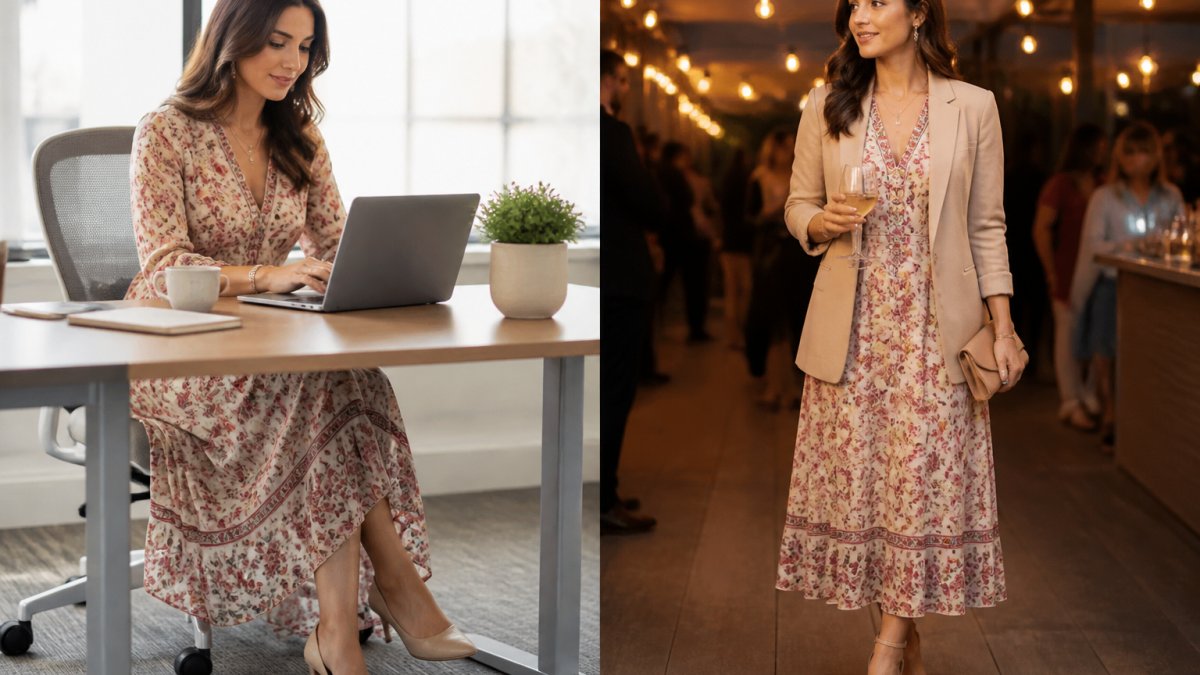
The Hermione Dress in green exemplifies this versatility. During the day, pair it with simple sandals and a structured blazer for professional polish.

Similarly, the Marta Dress in black with its smocked bodice and blouson sleeves reads as polished enough for professional settings while remaining feminine and boho.
When shopping, ask yourself: Can I wear this to work? Can I dress it up for evening?
Care and Longevity: Making Your Boho Dress Last
How you care for your dress directly impacts how long it lasts.
Check care labels before buying. Some fabrics require hand washing or dry cleaning, which adds cost and complexity.
Simple care practices extend dress life significantly:
- Wash in cold water to prevent fading
- Air dry rather than using heat
- Spot clean minor stains before washing
- Store on hangers or folded to prevent wrinkles
When a dress develops wear, consider repair before replacement. A loose seam or broken zipper is often fixable and far cheaper than buying new.
Choosing ethically made boho dresses online means asking questions about materials, labor practices, and longevity.
Frequently Asked Questions
What fabrics should I look for in an ethically made boho dress?
Prioritize natural fibers like organic cotton, rayon, and linen. These materials are breathable, comfortable, and typically produced with fewer chemicals than synthetic alternatives. Rayon offers a soft drape ideal for boho silhouettes, while linen blends provide durability. Check product descriptions for fiber content, reputable ethical brands list this clearly.
How can I tell if a boho dress brand is genuinely ethical and not just marketing?
Ask for third-party verification. Authentic ethical brands display certifications such as Fair Trade Certified or B Corp. Look for transparency about production location, labor practices, and material sourcing, legitimate companies publish this information on their websites. Be cautious of vague claims like 'eco-friendly' without supporting details. Check customer reviews for feedback on quality and durability. Brands with 995+ verified reviews, as Pink Martini Collection has, demonstrate customer trust and accountability.
Can I find ethically made boho dresses in larger sizes?
Yes, inclusive sizing is increasingly standard among ethical boho brands. Many offer XS through 2XL or larger, though availability varies by style. Before purchasing, check the size chart on the product page, measurements differ across brands. Pink Martini Collection carries multiple sizes across its boho dress collection, from XS to 2XL on selected styles.
Will ethically made boho dresses actually hold up to frequent washing and wearing?
Quality ethically made dresses are designed for durability. Natural fabrics like rayon and linen become softer with proper care. Follow care instructions (hand wash or gentle cycle for delicate fabrics) to extend lifespan.


Comments